
Quoting tree works: It’s rarely just the tree
When people receive a tree work quote, it’s easy to assume the price comes down to the size of the tree. Size matters, but it’s rarely the main driver. Far more often, cost reflects the risk, access, site complexity, equipment and planning required to do the job safely.
A tree in an open paddock is a very different proposition to one positioned over a house, fence, powerline, car park or school. In those cases the real challenge isn’t removing or pruning the tree — it’s protecting everything around it.
Risk comes first
Tree work is high-risk work, so every site is assessed before work begins. The tree’s condition and stability, surrounding structures, weather, ground conditions, nearby services and public access all shape how a job is planned. A storm-damaged tree may be unstable; a tree over a roof may need to be dismantled in sections; a tree near powerlines may call for specialist equipment and additional controls. It’s why two trees of similar size can carry very different costs — the safest approach depends on the site, not just the tree.
Access can change the entire job
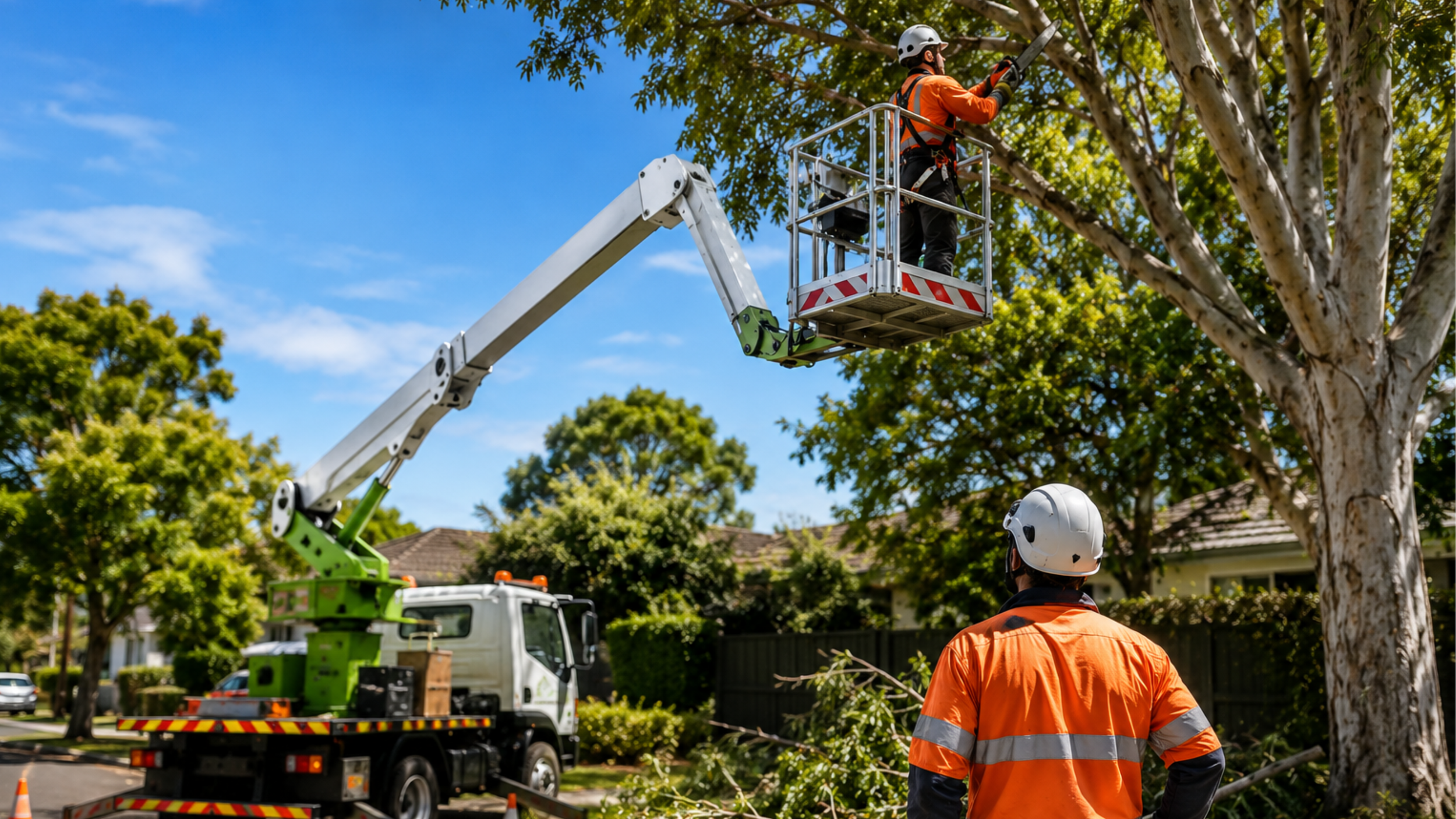
Access is one of the biggest factors in pricing. A tree with clear machinery access is far more straightforward than one in a tight backyard, on a steep block, or down a narrow laneway. Limited access affects how crews and equipment reach the tree, how timber is removed, whether a crane or elevated work platform is needed, how many crew are required, and how long the job takes to complete safely. Sometimes the tree isn’t large at all — the access is what makes the work complex.
The right equipment and crew
Professional tree work often takes more than a chainsaw and a chipper. Depending on the job, the safest solution may involve climbing crews, rigging systems, elevated work platforms, cranes, stump grinders, traffic control or arborist supervision. These resources exist to reduce risk and protect property — because the cheapest option isn’t always the safest, and in tree work the method matters.
Planning and compliance
For insurance, strata, council, facilities and commercial clients, documentation is part of the job. Before work begins, that can mean risk assessments, site planning, arborist reporting, permits, traffic management and clear communication with stakeholders. It’s largely invisible once the work is underway, but it’s what keeps a job properly managed from start to finish.
Emergency works add urgency
Storm make-safes bring added risk and complexity — crews respond to trees that have failed or become unstable, often alongside damaged buildings, blocked access or public safety concerns. The priority is to make the site safe quickly and responsibly, which takes fast coordination, experienced arborists, the right equipment and clear reporting.
Why proper assessment matters
At Enviro Trees, we assess each site properly before coordinating the safest, most effective solution — whether that’s a planned removal, pruning, stump grinding, arborist consulting or an emergency make-safe. Our role is to help clients manage tree works with confidence, knowing the risk, equipment, people and property have all been accounted for.
So when weighing the cost of tree works, look beyond the size of the tree. What drives the price is what’s required to complete the job safely and professionally — because in tree work, it’s rarely just the tree. It’s everything around it.